

Less Noise, More Feeling: Why Minimalist Event Design Works
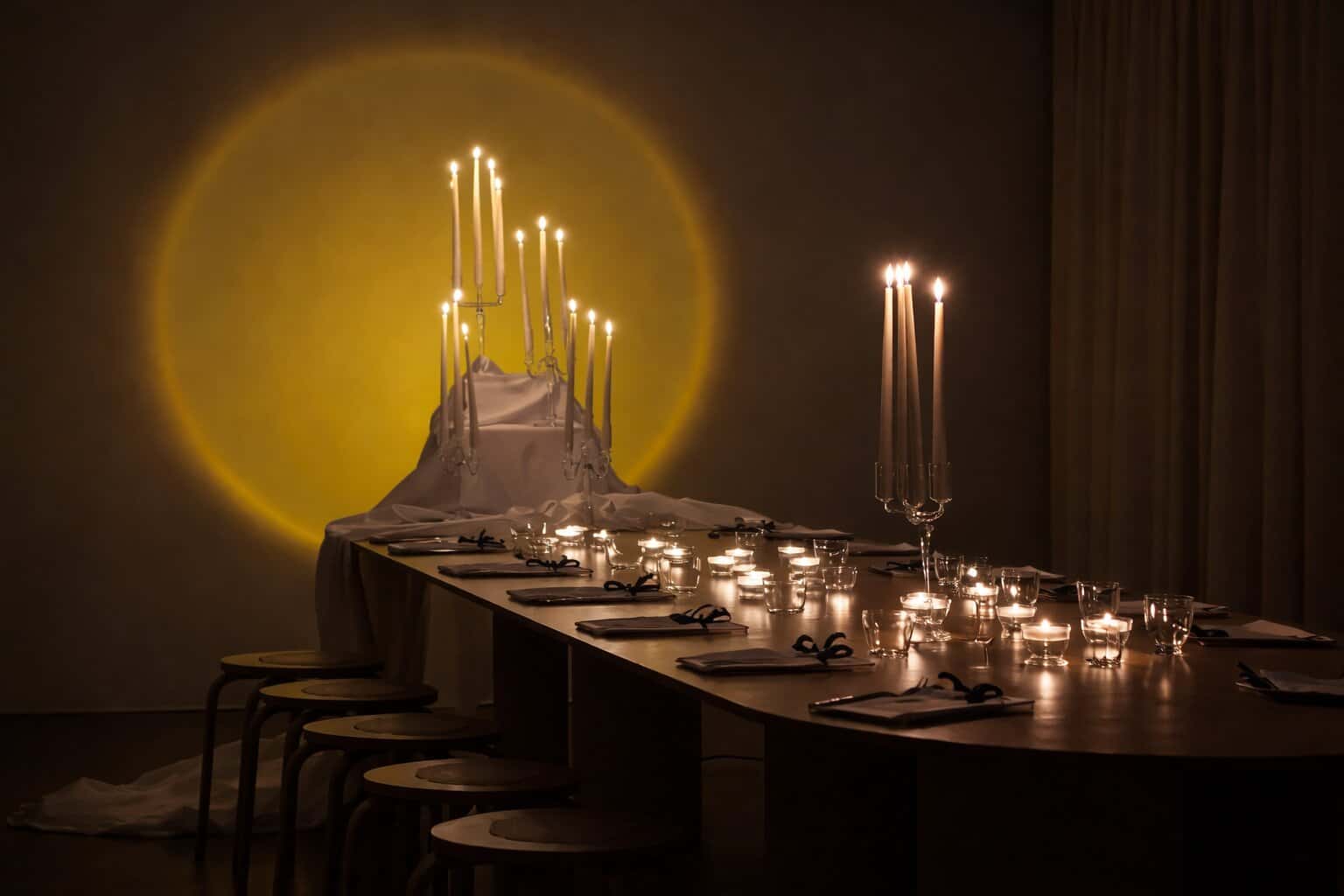
We live in a world where everything is competing for attention. Events are no exception — lights, installations, screens, performances, endless details. At some point, it all stops feeling special. It just becomes noise. Minimalism is where the experience becomes clear again. Not as a trend or a “clean look”, but as a deliberate decision …
We live in a world where everything is competing for attention. Events are no exception — lights, installations, screens, performances, endless details. At some point, it all stops feeling special. It just becomes noise.
Minimalism is where the experience becomes clear again. Not as a trend or a “clean look”, but as a deliberate decision to remove everything that doesn’t serve the moment. Because when there is less around you, you finally have space to feel.
Minimalism is not empty. It’s precise.
Minimalism is often misunderstood as something simple or even unfinished. In reality, it is one of the most demanding approaches in event design.
When you strip things back, there is nowhere to hide. Every element becomes visible — the lighting, the materials, the pacing, the way guests move through the space. If something is off, people feel it immediately, even if they can’t explain why.
That’s why minimalism demands clarity. You have to know exactly what you are creating and why. Every decision is intentional, and every detail has a role.
Feeling first, décor second
The starting point for a minimalist event is never décor. It’s always the feeling.
What should a person experience during the event? Not just what they should see, but what stays with them after:
- A sense of calm in the middle of a busy city.
- A quiet kind of excitement.
- A feeling of intimacy and being truly seen.
- That subtle “I don’t want this to end”.
Once this emotional core is clear, decisions become sharper. You stop adding objects just to fill space. You start choosing with intention.
Space as a design tool
One of the most powerful tools in minimalist events is space itself.
Not filling a room is a decision.
Leaving distance between people, allowing open sightlines, resisting the urge to decorate every corner — all of this changes how guests behave. They move more freely, they stay longer in conversations, they feel less overwhelmed. Space gives them permission to be present.
In a minimalist setting, negative space is not “empty”. It holds tension, anticipation and focus. It tells guests where to look and what truly matters.
Sensory detail in a quiet environment
When you remove visual noise, sensory detail becomes more important — and more powerful.
Not in an obvious, overwhelming way, but as a subtle, almost invisible layer:
- Sound that supports the atmosphere instead of dominating it.
- A scent that is barely noticeable, but becomes a memory anchor.
- Lighting that guides attention rather than demanding it.
- Materials that feel good to touch without needing explanation.
Guests don’t always consciously register these elements. They remember how the event made them feel — and that feeling is built from these details.
Technology that respects the space
Minimalist events do not reject technology, but use it in a lighter, more intelligent way.
Instead of heavy, permanent installations, technology becomes flexible and almost weightless:
- Projections that appear and disappear.
- Light that shifts the mood without overwhelming the room.
- Digital layers that live inside the architecture instead of sitting on top of it.
The goal is not to showcase technology for its own sake. It is to deepen the experience without breaking the atmosphere.
Timing as part of the design
In a minimalist event, timing is as important as décor.
If you show everything at once, you leave no space for curiosity. When elements unfold gradually — when light changes, when music evolves, when key moments are revealed at the right time — the event starts to feel like a story rather than a setup.
Guests are not just standing in a beautiful room. They are moving through a sequence of feelings.
Why minimalism feels like luxury
Minimalism today is strongly associated with luxury — not because it is empty, but because it is controlled.
There is no excess, no randomness, no need to impress through quantity. Everything feels considered. The silence, the distance between objects, the single perfectly placed light — they all communicate care and confidence.
This level of intention is what people now read as high-end. It tells them: someone thought about every second I spend here.
How SENRISEA works with minimalist event design
At SENRISEA, minimalism is not about making things look clean. It is about creating space for emotion.
Our process usually follows four key steps:
- Define the emotional core. We start by shaping the feeling: what should guests remember the next day? Calm, connection, elevation, inspiration?
- Edit the space. We remove everything that doesn’t support that feeling — unnecessary décor, visual noise, extra layers that distract.
- Script the senses. We design light, sound, scent, materials and flow as one system, so that guests experience a continuous, coherent atmosphere.
- Choreograph time. We build the event as a journey, not a static picture — with quiet moments, highlights and a clear closing note that stays with people.
The result is not a “minimal” event in the sense of “less effort”. It is the opposite: a highly curated experience where every element is doing real work.
In the end, when you take away the noise, you don’t create less. You create clarity. And that clarity is what allows people to connect — to the space, to each other, and to the moment itself.